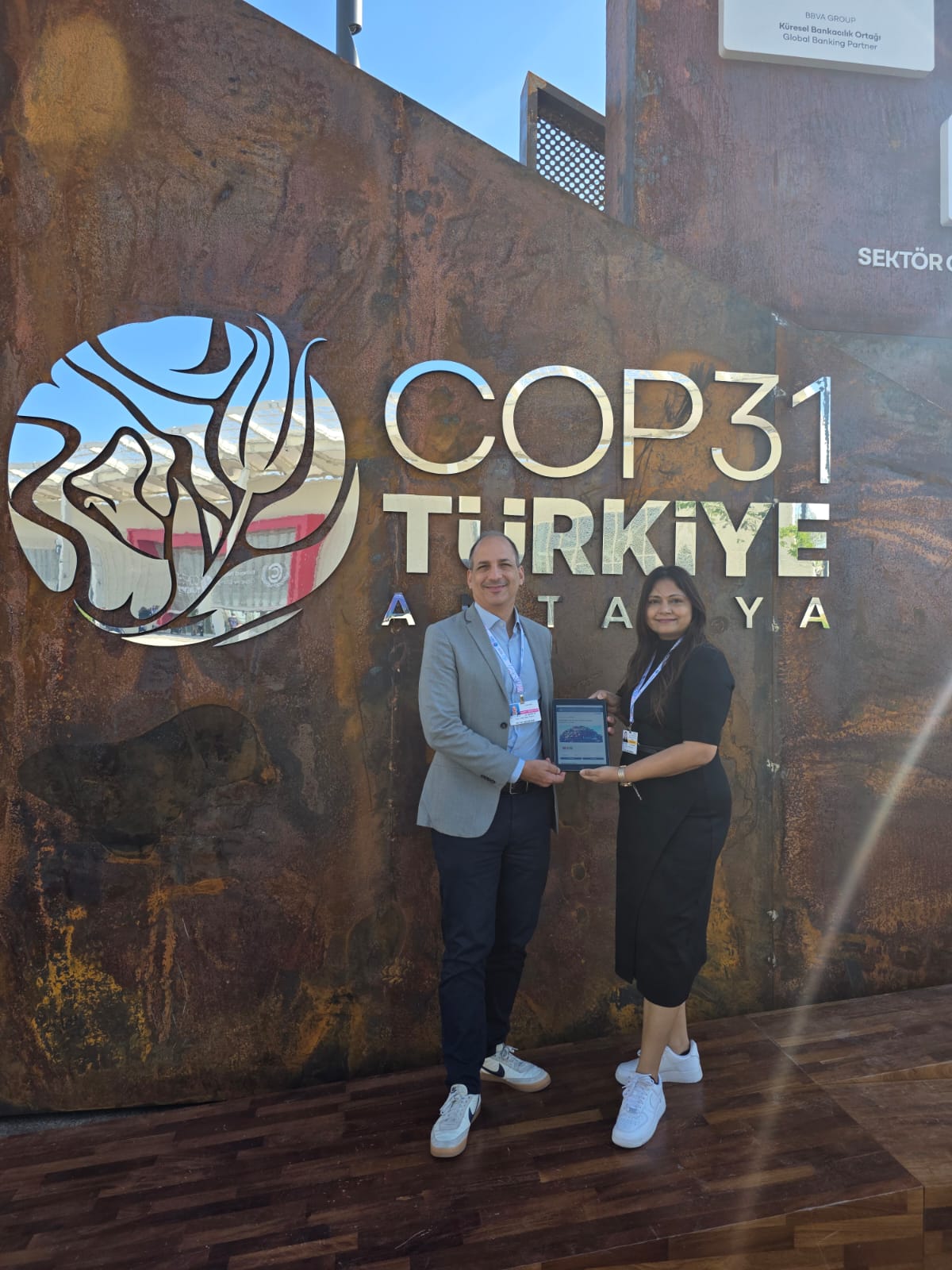
19th November 2026: Meta Materials Circular Markets (MMCM), India's pioneering circular economy solutions platform, in association with CerCarbono, announced the issuance of the world's first carbon credits from End-of-Life Vehicle (ELV) material recovery at COP31 in Turkey. The first Project Activity covers 20 Registered Vehicle Scrapping Facilities (RVSFs) across India, with the issuance of 24,988 carbon credits.
The issuance marks a significant milestone for circularity-linked carbon finance globally. It introduces a new mechanism to recognize and monetize the emissions reductions achieved through responsible vehicle scrappage and material recovery and creates an additional revenue opportunity for India's formal vehicle recycling ecosystem at a time when the country is set to retire vehicles at an unprecedented scale.
Developed by MMCM over the past two years, the ELV carbon-credit programme uses a dedicated methodology that quantifies the emissions avoided through the recovery and recycling of materials from end-of-life vehicles. it rewards RVSFs for choosing the formal route and strengthens the business case for bringing more of India's vehicle dismantling into a regulated, traceable system by putting a verified carbon value on responsible recycling.
The programme captures the associated environmental benefits and translates them into measurable and verified emissions reductions while enabling recovered materials to replace virgin material production.
Implemented under the CerCarbono standard, the programme follows an ELV-specific methodology developed by MMCM. The methodology sets the baseline, measures eligible material recovery and recycling, and addresses additionality and double counting.
This feat by MMCM also presents an opportunity for automotive manufacturers and corporate buyers to engage with a carbon-credit category directly linked to vehicle end-of-life management and material circularity. With digital monitoring, reporting and verification (MRV) infrastructure enabling traceability across participating facilities, the framework aims to strengthen transparency and give buyers visibility into the underlying recycling activities and associated emissions reductions.
Commenting on the milestone, Nitin Chitkara, CEO, MMCM, said, "This issuance represents an important step in bringing the environmental value of vehicle recycling into the carbon markets. By developing an ELV-specific methodology and establishing a framework for measuring and verifying emissions reductions, we are creating a new opportunity for the recycling ecosystem to benefit from carbon finance. We believe this model can encourage more responsible material recovery practices while opening up a new category of circularity-linked carbon credits for corporate buyers globally."
Poorvi Joshi Shenoy, AVP (Carbon Business), MMCM, added, "It is a proud moment to see a framework built in India set the global benchmark for a new category of carbon credits. By creating a credible framework to measure and monetize emissions reductions from vehicle dismantling and material recovery, we are opening new opportunities for the automotive ecosystem to participate in climate finance. This also demonstrates how measurable circular economy outcomes from India can contribute to global climate action.”
With a wider network of more than 40 authorized scrapping facilities across India, including facilities associated with Mahindra CERO, TVS and Tata Re.Wi.Re, MMCM aims to scale the programme across the country's vehicle recycling ecosystem. MMCM estimates that the broader programme can contribute approximately 0.5 million tonnes of CO₂e in emissions reductions by 2030 as the network grows.
The announcement brings an India-developed climate solution to the global stage at COP31. India has committed to reaching net-zero emissions by 2070 and is building the policy architecture for a circular, low-carbon economy, to the Carbon Credit Trading Scheme that underpins its domestic carbon market.

