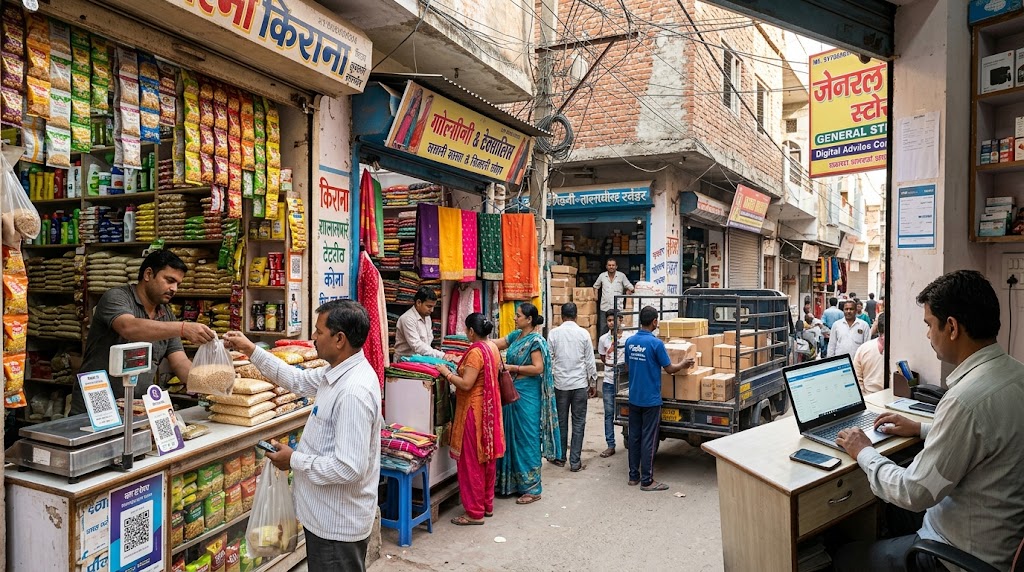
India’s small businesses and retail sector could gain from simpler tax procedures, improved compliance systems and smoother access to working capital as the government continues to focus on making it easier to do business. For shop owners, traders, local manufacturers and online sellers, reducing the time and cost involved in tax compliance can make a meaningful difference to everyday operations.
Small businesses often work with limited financial resources and tight profit margins. Managing tax returns, maintaining records and meeting regulatory requirements can add to their operating costs. Simplifying these processes could allow entrepreneurs to focus more on customers, sales and business expansion.
Simpler Tax Rules Can Help Retailers
Retailers are an important part of India's economy, connecting manufacturers and distributors with consumers across cities, towns and villages. From neighbourhood grocery stores and clothing shops to electronics dealers and small online businesses, the sector supports livelihoods and generates employment.
For these businesses, a simpler Goods and Services Tax (GST) system can reduce the administrative burden associated with filing returns and maintaining records. Easier compliance procedures can also help smaller enterprises manage their operations more efficiently.
However, the actual benefits depend on the specific GST provisions, eligibility requirements and implementation of the reforms. Simplified procedures do not automatically mean that every retailer will pay less tax.
Better Cash Flow Can Support Business Expansion
Cash flow is a major concern for small businesses, particularly those that need to purchase inventory, pay suppliers, cover rent and meet employee expenses before receiving payments from customers.
Delays in eligible GST refunds or difficulties in accessing input tax credits can put additional pressure on working capital. More efficient tax administration and timely refunds could help eligible businesses maintain healthier cash flows.
With improved access to working capital, retailers may be better positioned to replenish stocks, introduce new products, invest in digital payment systems and expand their customer base.
For small manufacturers and suppliers, smoother tax procedures could also improve business relationships by reducing delays across the supply chain.
E-Commerce Opens New Opportunities
Digital commerce is creating new opportunities for small businesses to reach customers beyond their immediate neighbourhoods. Local retailers and manufacturers can use online marketplaces and digital platforms to expand their reach without necessarily investing in a large physical store network.
Simpler compliance procedures could make online selling easier for eligible businesses, although GST registration and other requirements continue to depend on the applicable rules.
Greater participation in digital commerce can help small enterprises access wider markets, improve product visibility and compete with larger businesses. It can also encourage entrepreneurs to adopt digital invoicing, inventory management and online payment solutions.
Will Tax Reforms Reduce Prices for Consumers?
Simpler compliance and lower administrative costs can improve business efficiency, but consumers may not automatically see lower prices. Retail prices depend on several factors, including GST rates, procurement costs, transportation, rent, competition and profit margins.
Where businesses achieve genuine cost savings, some may choose to offer competitive prices, promotional discounts or better customer services. Others may use the savings to strengthen their finances or invest in expansion.
The broader benefit lies in creating a business environment in which retailers can operate more efficiently and respond better to changing consumer demand.
Small Businesses Remain Important to Economic Growth
India's small-business and retail sectors play an important role in employment generation, local entrepreneurship and the distribution of goods. A more efficient tax system can help formalise business activity, improve record-keeping and encourage enterprises to grow.
At the same time, successful implementation is essential. Clear guidance, accessible digital services and effective grievance-redressal mechanisms can help smaller businesses understand their obligations and avoid unnecessary compliance difficulties.
The Road Ahead
Tax simplification can become an important support for India's retail economy when it reduces paperwork, improves working capital management and allows entrepreneurs to concentrate on productive activities.
For small retailers, the real value of reform is not simply fewer forms or faster filings. It is the opportunity to run businesses more efficiently, serve customers better, create jobs and invest in future growth.
A transparent and predictable GST system, combined with improved access to finance and digital infrastructure, can help India's small businesses become more competitive and contribute more effectively to the country's economic development.

